
How a Commercial Bridge Loan Works for California Commercial Property

A commercial bridge loan is short-term financing, secured by commercial real estate, that covers the gap between an immediate need (buying, refinancing, or repositioning a property) and a longer-term resolution such as a sale or permanent loan. To understand how a commercial bridge loan works, focus on three features: the term is short, payments are usually interest-only, and the underwriting leans on the property and a credible exit strategy rather than on tax returns alone. That structure is the reason these loans can close in weeks rather than the months a conventional lender often needs.
What a Commercial Bridge Loan is
A bridge loan is temporary capital meant to be repaid quickly, generally within 12 to 24 months. A small-balance commercial bridge loan, typically a loan under roughly $5 million, serves the owner of a single industrial building, retail strip, small office, or multifamily property rather than an institutional portfolio. Because the loan is interest-only, the borrower pays only the interest that accrues each month and then repays the full principal as a balloon at the end of the term, usually from a refinance into permanent debt or from a sale. According to private-lending market data compiled by North Coast Financial, commercial bridge loans are commonly written for 12 to 24 month terms, carry a small number of points, and are structured interest-only, with leverage set more conservatively than a stabilized bank loan.
How a Commercial Bridge Loan Works, Step by Step
The process is shorter than a bank's, but the logic is disciplined. First, the lender evaluates the asset and the exit: what the property is worth today, what condition it is in, and exactly how the loan will be repaid. A clear exit, a signed sale contract, a refinance the borrower can realistically qualify for, or a lease-up that will stabilize income, matters more than almost anything else. Second, the lender sets leverage against value, which is why a bridge loan funds a portion of the property's worth rather than the full purchase price. Third, the lender prices the loan and confirms title, insurance, and the basic entity and property documentation. Finally, the loan funds.
A direct private lender that uses its own capital evaluates each deal individually instead of routing it through a credit committee, which is the main reason a clean file can move from application to funding in a fraction of the time a conventional loan takes.
What a Commercial Bridge Loan Costs in Today's Market
Bridge financing trades a higher cost for speed and short-term access to capital. Pricing tracks the broader rate environment: at its April 2026 meeting, the Federal Reserve held its benchmark target range at 3.50% to 3.75%, keeping short-term borrowing costs elevated relative to the prior decade. Against that backdrop, Commercial Loan Direct's rate tracker placed commercial loan pricing roughly between 10% and 12.75% in late May 2026, with short-term bridge debt sitting at the upper end of that range because of its short duration and transitional use.
These figures are general market context, not an RSR Lending, Inc. rate, quote, or commitment. Actual pricing on any private loan depends on the property, the leverage, the strength of the exit, and the lender.
Commercial Bridge Loan vs Conventional Financing
The choice between a commercial bridge loan vs conventional financing usually comes down to time. A bank or SBA loan generally offers a lower rate and a longer amortization, but it asks for full financial documentation, debt-service-coverage analysis, and often months of processing. A bridge loan is underwritten primarily on the collateral and the exit, so it can close quickly, at a higher cost, for a defined period. People often ask whether you can get a hard money loan on commercial property: yes, private and hard money lenders routinely lend against industrial, retail, office, and multifamily assets, and a commercial bridge loan is the version of that financing built for a planned, near-term payoff.
When a Commercial Bridge Loan Makes Sense
The clearest use case right now is refinancing pressure. The Mortgage Bankers Association estimates that about $875 billion of commercial mortgages, roughly 17% of the $5.0 trillion outstanding, are scheduled to mature in 2026, and the same survey reports that 23% of industrial-property loans come due this year. Owners facing a maturing balloon who need time to arrange permanent financing often use a bridge loan to retire the old note and avoid a forced sale.
Other common scenarios include time-sensitive purchases, where a seller wants a fast close; acquisitions at auction, which typically require cleared funds on a tight clock; value-add or lease-up plays, where a property is not yet stabilized enough for a bank; and a 1031 exchange, where timing is unforgiving. Under Section 1031, as summarized by the IRS, an investor has 45 days to identify a replacement property and 180 days to close, and bridge capital can keep a replacement purchase from slipping past those deadlines. A commercial bridge loan for an industrial property mid-transition, for example, can fund the acquisition now and be repaid once the asset is leased and refinanced.
How RSR Lending Approaches Commercial Bridge Loans in Monterey County
RSR Lending, Inc. is a direct private lender based in Aptos that funds its own capital across Santa Cruz, Santa Clara, Monterey, and San Benito counties. In Monterey County, much of the small-balance commercial activity centers on Salinas, where industrial, warehouse, and agriculture-adjacent properties trade and reposition regularly, along with retail and mixed-use along the broader Highway 101 corridor. These are exactly the property types where a planned, short-term bridge tends to fit: an owner buying a Salinas warehouse ahead of a tenant move-in, an investor retiring a maturing note on a retail building, or a buyer who needs to close before a bank could realistically fund.
Because RSR lends directly and reviews each file itself, it can typically move faster than an institution that has to clear committee. Commercial closings commonly run well under the timeline a conventional lender requires, and in clean cases with clear title and a defined exit, some move in a matter of days. You can read more about RSR's commercial bridge loan program and the property types it considers. All RSR commercial lending is business-purpose financing.
Talk Through Your Deal Before the Clock Runs
Bridge financing rewards preparation: a defined exit, clean documentation, and a realistic timeline. If you are weighing a purchase, a maturing balloon, or a repositioning anywhere in Monterey County or the wider Monterey Bay region, contact RSR Lending to talk through the structure and timing before a closing date is locked in.
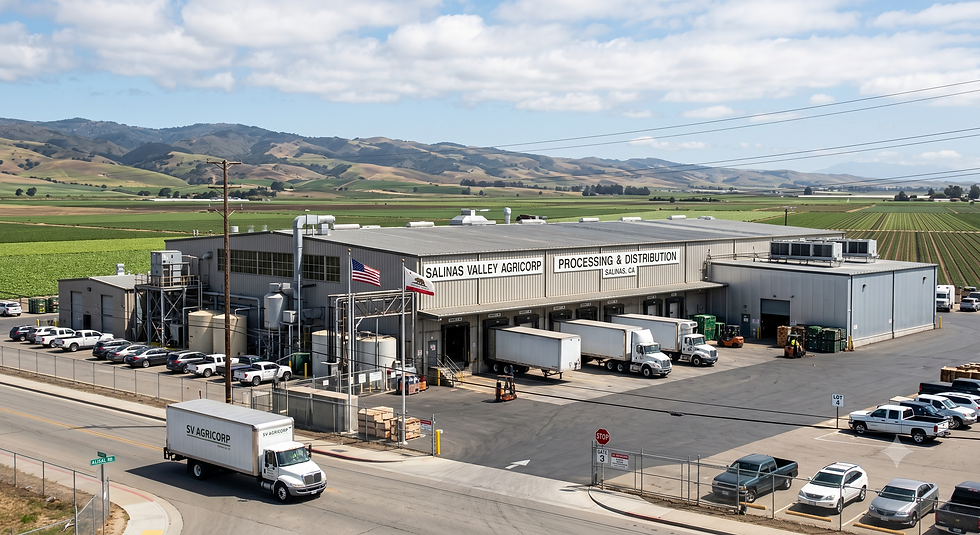
Image alt text: Industrial warehouse property in Salinas, Monterey County, illustrating how a commercial bridge loan works for California commercial real estate.
Frequently Asked Questions
Can you get a hard money loan on commercial property? Generally yes. Private and hard money lenders regularly lend against commercial assets such as industrial, warehouse, retail, office, and multifamily properties. A commercial bridge loan is a short-term version of that financing, underwritten mainly on the property's value and a clear repayment plan rather than on the borrower's income documentation alone.
How fast can a commercial bridge loan close? Faster than conventional financing in most cases, because the underwriting is asset-based and a direct lender funds its own capital. Timelines still depend on clean title, complete documentation, and a defined exit, so the speed is a function of how prepared the file is rather than a fixed promise.
What is the difference between a bridge loan and a hard money loan? The terms overlap. "Hard money" describes asset-based private lending in general, while "bridge loan" describes the purpose: short-term capital that bridges to a specific near-term payoff such as a sale or a refinance. A commercial bridge loan is typically a hard money loan structured around a planned exit.
What happens at the end of a commercial bridge loan term? The principal comes due as a balloon payment. Borrowers usually repay it by refinancing into permanent financing or by selling the property, which is why lenders weigh the exit strategy so heavily at the outset.


Comments